

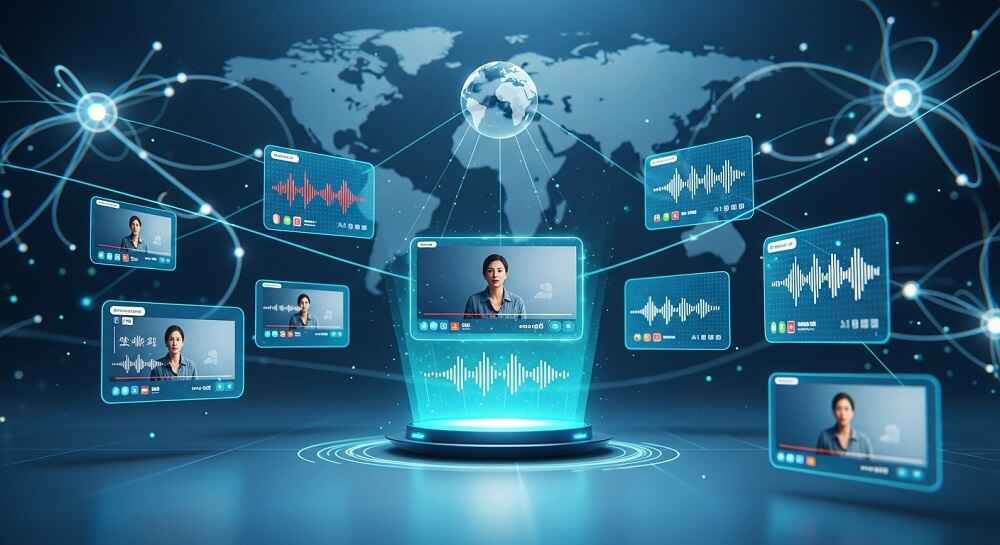
So you made a great video. The visuals are clean, the message is clear, and the content is actually good. But here is the problem. Only people who understand your language can benefit from it. What about the rest of the world?
This is where AI VIDEO TRANSLATOR TOOLS come in. These tools can translate your video into multiple languages within minutes, sometimes even seconds. No human translator needed. No expensive studio. No waiting weeks for subtitles.
In this article, we are going to talk about what these tools are, how they work, which ones are worth using, and why they are becoming a must-have for anyone serious about reaching a global audience.
What Is an AI Video Translator?
Simply put, an AI video translator is a tool that takes your existing video and automatically translates the spoken content into another language. It can add subtitles, replace the audio with a dubbed version in the target language, or both.
Is this different from just using Google Translate? Yes, very much so. These tools understand context, timing, tone, and sometimes even lip movement sync. That is a completely different level of technology.
The best AI video translators today can handle:
- Speech-to-text transcription
- Translation into 50+ languages
- Voice cloning or AI voice dubbing
- Subtitle generation and syncing
- Lip sync correction in some advanced cases
Why Does This Matter for Content Creators?
Think about it this way. If you are creating content only in English, you are technically missing out on more than 75% of the world’s internet users who are NOT native English speakers. Spanish, Hindi, Arabic, Portuguese, Mandarin users are all potential viewers of your content. They just can not access it properly right now.
Using an AI video translator lets you break that barrier. It is not just about subtitles anymore. Modern tools can actually dub your video so it sounds like you are speaking in that language. That level of localization creates REAL connection with your audience.
And if you are a business? The impact is even bigger. A product explainer video translated into 5 languages can reach 5 times more potential customers without making 5 separate videos.
Top AI Video Translator Tools in 2025
Let us look at some of the best tools available right now. Each one has its strengths depending on what you need.
| Tool | Best For | Languages Supported | Key Feature |
|---|---|---|---|
| HeyGen | Business & Marketing Videos | 40+ | AI lip sync dubbing |
| Rask AI | Content Creators & Educators | 130+ | Voice cloning + subtitles |
| ElevenLabs Dubbing | High quality voice dubbing | 30+ | Hyper-realistic voice synthesis |
| Papercup | Enterprise & Media | 15+ | Professional-grade dubbing |
| Veed.io | Quick subtitle translation | 100+ | Auto subtitles with translation |
| Synthesia | AI avatar-based videos | 120+ | Multilingual AI avatars |
Each of these tools has a slightly different approach. Some focus more on accuracy of translation, some on voice quality, and some on how natural the lip sync looks. Your choice depends on what matters most for your use case.
How Do These Tools Actually Work?
The process is actually pretty straightforward on the surface, even though the technology behind it is complex. Here is how most AI video translators work step by step:
- UPLOAD your original video to the platform
- The AI performs SPEECH-TO-TEXT transcription on the audio
- The transcription is TRANSLATED into your selected target language
- A TEXT-TO-SPEECH engine generates the dubbed audio using an AI voice
- The new audio is SYNCED with the original video timeline
- Subtitles are generated and embedded or exported separately
- You DOWNLOAD the final translated video
Some advanced tools like HeyGen even adjust the mouth movements of the speaker to match the new language. That is next level stuff and honestly very impressive.
Subtitles vs. Dubbing: Which One Should You Choose?
This is a question a lot of people ask. And honestly, there is no single right answer. It depends on your audience and your goals.
SUBTITLES are faster to produce, cheaper, and easier to update. They work great for educational content, tutorials, and any video where the audience is used to reading subtitles. YouTube, for example, is a platform where subtitles are widely accepted.
DUBBING, on the other hand, creates a more immersive experience. When someone hears the content in their own language, they feel more connected to it. This works better for advertisements, product demos, storytelling, and entertainment content.
If your budget allows, doing both is the smartest move. You get the accessibility of subtitles and the engagement of a dubbed voice.
Benefits of Using AI Video Translation for Global Reach
Let us get straight to the point. Here is why you should be using these tools:
- SAVES TIME compared to manual translation and dubbing
- Reduces costs significantly, sometimes by 80-90% compared to human studios
- Allows you to reach INTERNATIONAL MARKETS without building a new content team
- Improves SEO by making your content discoverable in multiple languages
- Increases watch time and retention among non-English audiences
- Builds TRUST with local audiences by speaking their language
- Lets small creators compete with big media companies on a global scale
Things to Watch Out For
These tools are amazing but not perfect. There are a few things you should know before relying on them 100%.
ACCURACY ISSUES: AI translation is not always 100% accurate, especially for technical content, idioms, or regional dialects. Always have someone proofread the translation if the stakes are high.
VOICE NATURALNESS: AI voices have improved a lot but they can still sound slightly robotic in some languages. Premium tools like ElevenLabs do better here but they cost more.
LIP SYNC: Most tools do not offer proper lip sync correction. The speaker’s mouth may not match the new audio, which can look a bit off especially in close-up shots.
CULTURAL CONTEXT: Translation is not just converting words. Context, humor, and cultural references often get lost or become awkward. Keep that in mind.
Who Should Be Using AI Video Translation Tools?
Honestly? A lot of people. Let me break it down:
- YouTubers who want to grow their channel internationally
- Online course creators selling to students in other countries
- E-commerce brands running product ads in multiple regions
- Corporate teams creating training materials for global employees
- News agencies distributing content across different language markets
- NGOs and nonprofits spreading awareness campaigns globally
If your content has value beyond your home country, then AI video translation is no longer optional. It is becoming a necessity.
Combine AI Translation with AI Video Creation
Here is something worth thinking about. What if you did not just translate existing videos but also created new videos in multiple languages from the start?
That is entirely possible today. You can use tools available on VeoAIFree’s AI Video Generators to generate original video content using AI, and then run that content through a translation tool to instantly localize it for different regions. That is a full content pipeline built on AI. No camera, no studio, no large team required.
If you are also creating visual content for thumbnails, social posts, or promotional material, you can check out the AI Image Generators on VeoAIFree to complement your video strategy with strong visuals across all languages and markets.
Creating videos for platforms like TikTok or Instagram in multiple languages? VeoAIFree even has dedicated tools for that. The AI TikTok Video Generator lets you create platform-ready short form content that you can then translate and distribute globally.
Quick Tips to Get Better Results from AI Video Translators
- Speak clearly and at a moderate pace in your original video. This helps the transcription accuracy a lot.
- Avoid heavy slang, idioms, or acronyms that do not translate well.
- Use a good microphone. Better audio quality means better transcription, which means better translation.
- Always review the translated subtitles before publishing, especially for important content.
- Choose a tool that supports the specific languages your target audience speaks, not just the popular ones.
The Future of AI Video Translation
Where is all this heading? Very fast, in an exciting direction. In the near future, we will likely see tools that can translate videos in REAL TIME during live streams. We will also see better lip sync technology that makes dubbed content nearly indistinguishable from the original.
Some companies are already working on AI systems that can replicate your exact voice in another language. So instead of an AI voice reading the translation, it will actually SOUND like you speaking Spanish, French, or Japanese.
The barrier between language and content is slowly disappearing. Creators who adapt early will have a massive advantage.
Final Thoughts
AI video translator tools are one of the most practical innovations in content creation right now. They give creators, businesses, and educators the power to reach any corner of the world without needing a massive budget or a professional localization team.
Yes, they are not perfect yet. But they are getting better every single month. And even at their current state, the value they provide is hard to ignore.
If you have not explored AI video translation yet, now is a good time to start. Pick one tool from the list above, test it with a short video, and see the difference it makes. You might be surprised how quickly your content can travel when the language barrier is no longer in the way.